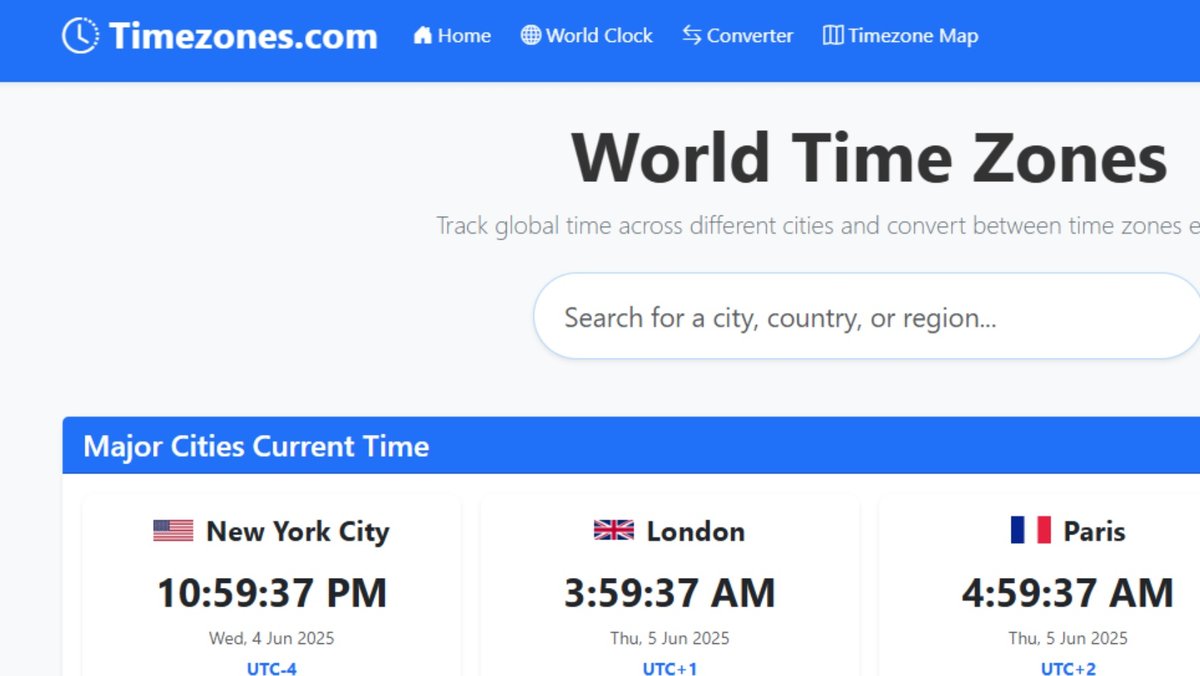
In a city as dynamic as Fort Worth, Texas, knowing the precise time isn't just a matter of convenience; it’s essential for business, travel, and coordinating life. But with time zones, Daylight Saving Time shifts, and a myriad of digital clocks, how do you ensure you’re always on the same accurate page? This guide cuts through the confusion, showing you the most reliable sources for Fort Worth time information so you’re never left wondering if you’re early, late, or just plain wrong.
We’ve all been there: a forgotten Daylight Saving shift, a device that hasn't updated, or a calendar invite that uses an ambiguous time zone abbreviation. For Fort Worth residents and visitors alike, understanding the nuances of Central Time and how to verify it can save you significant headaches. Let’s dive into making time a reliable ally, not a source of stress.
At a Glance: Key Takeaways for Fort Worth Time
- Time Zone: Fort Worth is in the Central Time zone.
- Daylight Saving Time (DST): Fort Worth observes DST.
- Winter Time: Central Standard Time (CST), which is UTC-6. This runs from early November to early March.
- Summer Time: Central Daylight Time (CDT), which is UTC-5. This runs from early March to early November.
- DST Shifts: Clocks "spring forward" one hour on the second Sunday in March at 3:00 AM. Clocks "fall back" one hour on the first Sunday in November at 1:00 AM.
- Most Reliable Sources: Atomic clock-synced devices, official time websites (like Time.gov), and reputable news sources.
- Avoid Ambiguity: Prefer UTC offsets (UTC-6, UTC-5) or the IANA identifier
America/Chicagoover "CST" or "CDT" when possible, especially for scheduling across zones.
The Unseen Clockwork: Why Fort Worth Time Matters (and Why It's Tricky)
Fort Worth, a vibrant hub of culture, commerce, and community, operates on a precise schedule. From catching a flight out of DFW to making a meeting at the Stockyards, or simply syncing up with friends for dinner, accurate time information is the unseen backbone of daily life. Yet, what seems like a simple concept—"What time is it?"—can quickly become complex.
The underlying challenge isn't usually with the clocks themselves, but with how we interpret and apply time in a world that spans multiple time zones and observes seasonal adjustments like Daylight Saving Time. For Fort Worth, situated comfortably in the heart of Texas, this means navigating the transition between Central Standard Time (CST) and Central Daylight Time (CDT). Understanding this fundamental shift, and knowing where to verify it, is your first step toward impeccable timekeeping.
Decoding Fort Worth's Time Signature: CST vs. CDT & UTC Offsets
Let's get specific about Fort Worth's place on the global time map. At its core, Fort Worth adheres to the Central Time zone. However, this isn't a static concept throughout the year.
- Central Standard Time (CST): This is Fort Worth's "default" time zone during the colder months. When Fort Worth is on CST, it is UTC-6. This means it is six hours behind Coordinated Universal Time (UTC), the world's primary time standard. You'll observe CST roughly from the first Sunday in November until the second Sunday in March.
- Central Daylight Time (CDT): As the days lengthen, Fort Worth "springs forward" into CDT. During this period, from the second Sunday in March until the first Sunday in November, Fort Worth is UTC-5. It's still called "Central Time," but the offset from UTC changes by an hour.
It's crucial to grasp the concept of UTC offsets. Unlike abbreviations like "CST" or "EST," which can sometimes be ambiguous (especially in a global context where some regions use "EST" for Eastern Summer Time, not Eastern Standard Time), a UTC offset is crystal clear. UTC-6 or UTC-5 unambiguously tells you Fort Worth's exact relationship to the world's atomic clock standard.
For computers and global scheduling systems, Fort Worth's time is managed by the IANA (Internet Assigned Numbers Authority) time zone identifier:America/Chicago. This identifier automatically handles the transitions between CST and CDT, ensuring your digital devices reflect the correct local time without manual intervention, provided they are configured correctly.
Where to Find the Most Accurate Fort Worth Time – Your Go-To Sources
When you need to know the current time in Fort Worth without a shadow of a doubt, bypassing potential errors is key. Here are the most reliable sources, categorized for clarity:
1. Official Atomic Clock Standards
These are the gold standard, providing time derived from highly precise atomic clocks.
- National Institute of Standards and Technology (NIST): As a division of the U.S. Department of Commerce, NIST maintains the official time for the United States. Their website, Time.gov, displays the current time based on NIST's atomic clocks, adjusted for your local time zone. It's an excellent, definitive source for Fort Worth time. When checking, ensure the display is set to "Central Time" or look for the UTC offset.
- U.S. Naval Observatory (USNO): Another pillar of precise timekeeping, the USNO is responsible for providing the precise time and astronomical data required for navigation and national security. While less user-friendly for a quick check than Time.gov, their data underpins many other reliable sources.
2. Digital Devices & Operating Systems
Your everyday tech can be incredibly accurate, provided it's configured correctly.
- Smartphones, Computers, and Tablets: Most modern operating systems (iOS, Android, Windows, macOS, Linux) are designed to automatically synchronize their clocks with highly accurate Network Time Protocol (NTP) servers. These servers, in turn, often get their time from atomic clock sources like NIST or USNO.
- How to ensure accuracy: Double-check your device's date and time settings. Ensure "Set Automatically" or "Synchronize with an Internet time server" is enabled, and that the correct time zone (
America/Chicagoor "Central Time - Chicago") is selected. If your device ever seems off, restarting it or manually re-syncing can often resolve the issue. - NTP Servers: These are the unsung heroes of digital timekeeping. Your devices connect to NTP servers to fetch the current time. Public NTP pools (pool.ntp.org) are widely used and reliable. If you're a tech-savvy user, you can configure your computer to use specific NTP servers for maximum precision.
3. Reputable Online Time Services
For quick checks or planning across multiple time zones, these websites are invaluable.
- Google Search: Simply typing "time in Fort Worth" into Google will display the current accurate time at the top of the search results, usually synced with reliable sources. This is perhaps the quickest everyday check. You can also quickly find the Current time in Fort Worth through a search.
- World Time Buddy / Time and Date: Websites like WorldTimeBuddy.com or TimeAndDate.com are excellent for visualizing current times across multiple cities globally, planning meetings, or looking up historical time data. They are built on robust time zone databases, including IANA rules.
- Weather Apps/Sites: Many local weather applications and websites integrate real-time clock displays. While primarily focused on weather, their time information is generally accurate as it relies on system clocks synced via NTP.
4. Local Official Sources
For specific event timing or official schedules, always refer directly to the source.
- City of Fort Worth / Tarrant County Websites: For official events, government office hours, or deadlines, the official websites for the City of Fort Worth or Tarrant County will state times explicitly, based on local Fort Worth time.
- Local News Stations: Fort Worth-area TV and radio news stations (e.g., NBC 5 DFW, WFAA 8, Fox 4 KDFW) consistently display the current local time as part of their broadcasts, and their websites will also feature accurate time information.
The Daylight Saving Dance: When Fort Worth "Springs Forward" and "Falls Back"
Daylight Saving Time (DST) is arguably the biggest culprit of time confusion. Fort Worth observes DST, meaning its clocks change twice a year. Mark these dates on your calendar, or better yet, trust your properly configured devices to handle it.
- "Spring Forward": On the second Sunday in March, at 3:00 AM local time, clocks in Fort Worth jump forward one hour to 4:00 AM. This marks the transition from CST (UTC-6) to CDT (UTC-5). You "lose" an hour of sleep, but gain an hour of evening daylight.
- Example: If it's 2:59 AM on the second Sunday in March, the next minute it becomes 4:00 AM.
- "Fall Back": On the first Sunday in November, at 1:00 AM local time, clocks in Fort Worth fall back one hour to 12:00 AM (midnight). This marks the transition from CDT (UTC-5) back to CST (UTC-6). You "gain" an hour of sleep, and mornings become brighter earlier.
- Example: If it's 12:59 AM on the first Sunday in November, the next minute it becomes 12:00 AM again. This hour is repeated.
Common DST Errors to Avoid:
- Forgetting the Change: Manually set clocks (like in older cars, microwaves, or non-smart wall clocks) will not update automatically. Remember to adjust them.
- Assuming Universal DST: Not all regions observe DST, or they may observe it on different dates. When coordinating with people outside Fort Worth or Texas, always clarify whether they observe DST and what their local time will be.
- Ambiguous Communication: When scheduling, stating "3 PM CST" in March can be confusing, as Fort Worth will actually be on CDT. It's better to say "3 PM Central Time" and let context imply the correct DST observance, or better yet, use UTC offsets (e.g., "9 PM UTC" or "3 PM UTC-5").
Understanding the "Why": UTC, GMT, and Time Zones Explained (Simply)
Knowing where to find the time is one thing, but understanding the system behind it empowers you to navigate any time-related challenge.
UTC vs. GMT: The Modern Standard
- Coordinated Universal Time (UTC): This is the modern, global standard for time. Introduced in 1972, UTC is based on highly precise atomic clocks, making it incredibly accurate and stable. All local time zones around the world are defined by their hourly offset from UTC (e.g., Fort Worth is UTC-6 in winter, UTC-5 in summer).
- Greenwich Mean Time (GMT): This is an older, solar-time-based standard. For practical, everyday purposes, GMT and UTC are often used synonymously, particularly for the UTC+0 time zone. However, UTC is the more precise and technically correct global reference point today. So, while you might hear "GMT," know that "UTC" is the authoritative standard.
The Power of UTC Offsets
Think of UTC as the "zero point" on a global time ruler. Every other time zone is a certain number of hours "plus" or "minus" from UTC.
- Example: When Fort Worth is on CST (UTC-6), it means if it's 12:00 PM (noon) UTC, it's 6:00 AM in Fort Worth. When Fort Worth is on CDT (UTC-5), it means if it's 12:00 PM UTC, it's 7:00 AM in Fort Worth.
This system is unambiguous. It completely bypasses the confusion of local time zone abbreviations and their potential for misinterpretation, especially in international communication.
IANA Time Zones: The Engine of Digital Clocks
The Internet Assigned Numbers Authority (IANA) maintains the world's time zone database. This database is what operating systems and software use to understand time zones, including their specific DST rules, historical changes, and offsets. The America/Chicago identifier for Fort Worth isn't just a label; it's a rule set that precisely dictates when and how Fort Worth's clocks change throughout the year. This ensures that a computer in Tokyo can correctly calculate what time a meeting in Fort Worth is happening, even with DST shifts.
Common Pitfalls and How to Avoid Them
Even with the best intentions, time errors can creep in. Here's how to steer clear of common Fort Worth time snafus:
- Relying on Outdated or Unverified Sources: That old wall clock that runs slow, a poorly coded website, or a social media post that's weeks old are not reliable. Always cross-reference with an official source or your trusted, synced digital devices.
- Forgetting Daylight Saving Time Changes: This is the classic pitfall. While your smartphone will likely handle it, manually set clocks (car, oven, microwave) won't. Make a habit of checking a reliable source a few days before the official DST change dates.
- Misinterpreting "CST" or "CDT" when Planning: If you're scheduling an event for Fort Worth and just write "3 PM CST" in July, you're technically using the wrong abbreviation because Fort Worth would be on CDT. While most locals will understand what you mean, it's imprecise. To be truly accurate, either specify "3 PM Central Time" (which implies the correct DST observance) or use "3 PM UTC-5." When scheduling internationally, always specify the city or use UTC offsets.
- Device Settings Issues: If your phone or computer shows the wrong time, it's almost always due to incorrect settings. Check if "Set Automatically" is enabled, if the correct time zone is selected, and if a system update might be pending that affects time zone rules.
- Traveler's Disorientation: When traveling into or out of Fort Worth, especially across time zones, give your devices a moment to update. Manually setting your phone's time zone can sometimes override automatic updates, leading to persistent errors. Trust the "automatic" setting unless you have a specific reason not to.
Fort Worth Time FAQs: Your Quick Answers
Here are quick answers to some of the most frequently asked questions about time in Fort Worth:
- What time zone is Fort Worth in?
Fort Worth is in the Central Time zone. - Does Fort Worth observe Daylight Saving Time?
Yes, Fort Worth observes Daylight Saving Time (DST). - When does Daylight Saving Time start and end in Fort Worth?
DST begins on the second Sunday in March at 3:00 AM (clocks move forward to 4:00 AM). DST ends on the first Sunday in November at 1:00 AM (clocks move back to 12:00 AM). - Is GMT the same as UTC for Fort Worth?
While GMT (Greenwich Mean Time) and UTC (Coordinated Universal Time) are often used interchangeably for the prime meridian (UTC+0), UTC is the more precise and universally recognized global standard based on atomic clocks. Fort Worth's time is defined by its offset from UTC (UTC-6 in winter, UTC-5 in summer). - Why do my devices sometimes show the wrong time?
Most often, this is due to incorrect settings (e.g., "Set Automatically" is off, or the wrong time zone is selected), or a temporary glitch in synchronizing with Network Time Protocol (NTP) servers. Ensure your device's date and time settings are configured to update automatically and select the correctAmerica/Chicagotime zone.
Keeping Pace: A Personal Checklist for Time Accuracy
Mastering Fort Worth time means cultivating a few good habits. Here’s a simple checklist to ensure you’re always operating on the correct schedule:
- Automate Your Devices: Ensure all your critical digital devices (smartphones, computers, smartwatches) are set to automatically update their time and time zone. This is your primary line of defense against time errors.
- Verify Manual Clocks: Make a note to manually adjust any non-smart clocks (e.g., in your car, kitchen appliances) when Daylight Saving Time changes occur.
- Bookmark a Trustworthy Source: Keep Time.gov or a similar reputable online time service bookmarked for quick verification, especially around DST change dates.
- Think UTC Offsets for Coordination: When communicating schedules with people outside Fort Worth, especially across different time zones, get into the habit of specifying the city or using UTC offsets (e.g., "Meeting at 10 AM Fort Worth time / UTC-5") to avoid any ambiguity.
- Stay Informed on DST Dates: While devices handle it, a quick reminder from a local news source or reliable calendar can prevent last-minute confusion.
By understanding Fort Worth's time mechanics and relying on these verified sources, you'll gain confidence in your timekeeping, ensuring you're always precisely where you need to be, when you need to be there. Accurate time isn't just about avoiding lateness; it's about seamless coordination in a connected world.