The clock hands keep moving, and if you’re trying to pinpoint the Current Time in Fort Worth (Live & Real-time), you’re looking for more than just a fleeting number. You need certainty, whether you're scheduling a video call across continents, catching a flight from DFW, or simply making sure you're on time for that barbecue. Fort Worth, a vibrant hub in North Texas, dances to the rhythm of the Central Time zone, a designation that brings with it a few important distinctions you'll want to understand.
This isn't just about glancing at a clock; it's about understanding the invisible forces that govern time in this dynamic city, from seasonal shifts to global standards. Let’s dive into how Fort Worth keeps time, ensuring you’re always perfectly aligned with the local hour.
Fort Worth Time, At a Glance
Here’s the essential rundown on what you need to know about the current time in Fort Worth:
- Time Zone: Central Time (CT).
- Standard Time (Winter): Central Standard Time (CST), which is UTC-6.
- Daylight Saving Time (Summer): Central Daylight Time (CDT), which is UTC-5.
- Observes DST: Yes, Fort Worth "springs forward" and "falls back" annually.
- IANA Time Zone Identifier: America/Chicago (this is the technical name for computers).
- Current Offset: Changes seasonally between UTC-6 (CST) and UTC-5 (CDT).
- How to Get Live Time: Reliably through synced digital devices, official time websites, or local news.
How to Always Know the Current Time in Fort Worth (Live & Real-time)
In today’s connected world, getting the exact local hour in Fort Worth, Texas, is remarkably straightforward, but it's vital to rely on accurate, real-time sources. Forget the guesswork; here’s how to always stay perfectly in sync:
Your Digital Devices: The Most Reliable Companions
The quickest and most common way to know the current time in Fort Worth is right in your pocket or on your desk.
- Smartphones & Tablets: Almost all modern smartphones (iOS, Android) automatically detect your location and adjust their time to the local zone. If you're physically in Fort Worth, your phone will display the correct time. If you're elsewhere but want to know the time in Fort Worth, add it as a separate world clock. Make sure your device's "Set Automatically" or "Automatic Time Zone" setting is enabled.
- Computers: Similarly, operating systems like Windows, macOS, and Linux often synchronize their clocks with network time servers (NTP). Ensure your computer's time zone settings are set to "Central Time (US & Canada)" and that automatic time synchronization is active.
- Smartwatches & GPS Devices: These devices frequently have built-in time zone intelligence, automatically updating as you travel or when connected to their respective apps.
Online Time Services: Precision at Your Fingertips
For the absolute most precise, up-to-the-second time, especially if you're not in Fort Worth, online time services are your best bet. These platforms pull data from atomic clocks and official time servers, ensuring unparalleled accuracy.
- Dedicated Time Zone Websites: Many reputable websites offer live, continuously updating clocks for cities worldwide, including Fort Worth. A quick search for "current time Fort Worth" will usually lead you to these. These sites often display the time in various formats, along with useful information like the current UTC offset, sunrise/sunset times, and upcoming DST changes.
- Search Engine Results: Simply typing "what time is it in Fort Worth" into Google or other search engines will typically yield a large, accurate digital clock at the top of the results page, showing the live time.
Local Clocks & Broadcasts: Traditional Accuracy
While less precise than atomic-clock-synced digital devices, local sources still provide reliable indications:
- Atomic Clocks: Many modern wall clocks and alarm clocks are "atomic," meaning they synchronize with radio signals from national time standards (like NIST's WWVB in Colorado). If set up correctly, these offer excellent accuracy.
- Local News Channels: During their broadcasts, local Fort Worth news channels will often display the current time, usually in a corner of the screen.
When you need to know the current time in Fort Worth, remember that your synced devices and online resources are your most dependable allies.
Understanding Fort Worth's Time Zone: Central Time (CT) Explained
Fort Worth is strategically located within the Central Time (CT) zone, a designation shared by much of the central United States, Canada, Mexico, and parts of Central America. But "Central Time" isn't a static concept; it shifts between two specific offsets depending on the time of year.
The Two Faces of Central Time: CST vs. CDT
To truly understand Fort Worth's time, you need to differentiate between its standard and daylight saving variants:
- Central Standard Time (CST): This is the "winter" time in Fort Worth. During CST, Fort Worth is 6 hours behind Coordinated Universal Time (UTC-6). This period typically runs from early November to early March. Think of it as the base time for the region.
- Central Daylight Time (CDT): This is the "summer" time in Fort Worth. To take advantage of longer daylight hours, clocks are moved forward, placing Fort Worth 5 hours behind Coordinated Universal Time (UTC-5). This change occurs from early March to early November.
This distinction is crucial because simply saying "Central Time" isn't always precise enough for critical scheduling, especially when interacting with areas that might not observe Daylight Saving Time.
Daylight Saving Time (DST): Fort Worth's Annual Time Warp
Like most of Texas and the U.S., Fort Worth fully participates in Daylight Saving Time (DST). This twice-yearly ritual shifts the local time to maximize daylight in the evenings during warmer months.
- "Spring Forward": In the spring, usually the second Sunday in March, clocks jump forward one hour. For example, if it's 2:00 AM CST, it instantly becomes 3:00 AM CDT. This means "losing" an hour of sleep that night but gaining an hour of daylight in the evening. This is when Fort Worth switches from UTC-6 to UTC-5.
- "Fall Back": In the fall, typically the first Sunday in November, clocks fall back one hour. So, 2:00 AM CDT reverts to 1:00 AM CST. You "gain" an hour of sleep, and mornings become brighter earlier, but evenings darken sooner. This is when Fort Worth switches from UTC-5 back to UTC-6.
These shifts are automatic for most modern devices, but it's good to be aware, especially for fixed appointments or for delving deeper into Daylight Saving Time and its implications.
The 2026 DST Schedule in Fort Worth (Illustrative Example)
To give you a concrete example of how this works, let's look at the schedule for 2026:
- DST Starts: Sunday, March 8, 2026, at 2:00 AM local standard time (CST). Clocks will move forward 1 hour, becoming 3:00 AM CDT.
- DST Ends: Sunday, November 1, 2026, at 2:00 AM local daylight time (CDT). Clocks will move backward 1 hour, becoming 1:00 AM CST.
These dates generally follow a consistent pattern year after year, but it's always wise to confirm the exact dates for the current year if you're planning something time-sensitive.
Why Time Zones Matter Beyond the Clock Face
Understanding Fort Worth's time isn't just an academic exercise; it has real-world implications for daily life, business, and travel. Ignoring time zone differences can lead to missed meetings, delayed flights, and communication mix-ups.
Business and Communication: Bridging the Time Gap
For those conducting business with Fort Worth from other parts of the world, or even just across the U.S., time zone awareness is paramount.
- Scheduling Meetings: A 9 AM meeting in New York (Eastern Time) is a 8 AM meeting in Fort Worth (Central Time). For California (Pacific Time), that's 6 AM! Miscalculating can mean missed connections or inconvenient hours.
- Customer Service: Ensuring your support staff are available during Fort Worth business hours (and vice versa for your Fort Worth-based team) is critical for customer satisfaction.
- Project Deadlines: A deadline set for "midnight UTC" needs careful conversion to Fort Worth's current local time (CST or CDT) to avoid last-minute rushes or missed submissions. Knowing the exact offset is key to navigating business hours in Fort Worth effectively.
Travel: Arriving on Time, Every Time
Whether you're flying into Dallas/Fort Worth International Airport (DFW) or driving in from a neighboring state, travel involves time changes.
- Flight Schedules: All flight times are listed in local time. When flying to Fort Worth, remember to adjust your internal clock—and your actual clock—to Central Time upon arrival. For example, a flight departing Los Angeles at 10 AM PT would land in Fort Worth at 3 PM CT (assuming a 3-hour flight duration).
- Hotel Check-ins/Check-outs: These are always based on local time.
- Appointments: Doctor's visits, tours, or dinner reservations must align with Fort Worth's local time.
- Jet Lag: While Fort Worth is in the contiguous US, crossing multiple time zones can still induce mild jet lag. Adjusting your watch and mindset quickly helps. Planning your visit to Fort Worth meticulously, including time zone shifts, ensures a smoother experience.
Daily Life and Planning
Even for residents, awareness of DST changes and the exact time is important for:
- Broadcasting Schedules: TV shows, radio programs, and live streaming events often announce times in "Central" or specify CST/CDT.
- Event Planning: When organizing or attending events, especially those that draw people from outside the immediate area, clearly stating "Central Time (CT)" or "CDT/CST" is a best practice. This is crucial for planning for local events without a hitch.
- Meeting Friends/Family: A simple "meet at 7 PM" assumes local time, but if one party is traveling, confirming the time zone prevents confusion.
The Technical Underpinnings: UTC, Offsets, and IANA
Behind the straightforward clock on your wall are layers of international standards and technical identifiers that ensure global timekeeping is precise and consistent. Fort Worth's time is part of this intricate global network.
UTC: The World's Time Anchor
Coordinated Universal Time (UTC) is the backbone of global timekeeping. It's the primary time standard by which the world regulates clocks and time. Derived from highly precise atomic clocks, UTC is a scientific and universally accepted reference.
- Why UTC? Before UTC, many countries relied on Greenwich Mean Time (GMT). While often used interchangeably in casual conversation, UTC is the modern, more precise standard. It's not tied to any specific geographical location or political entity, making it truly universal.
- UTC Offsets: Every time zone, including Fort Worth's, is defined by its difference from UTC. This difference is called the UTC offset, expressed as hours and minutes ahead of (+) or behind (–) UTC.
- During Central Standard Time (CST), Fort Worth is UTC-6.
- During Central Daylight Time (CDT), Fort Worth is UTC-5.
Using these offsets ensures unambiguous communication of time across the globe, cutting through the confusion of identical time zone abbreviations that might refer to different regions (e.g., CST can also mean China Standard Time). This is fundamental to mastering time zone conversions.
GMT vs. UTC: A Clarification
Often, you'll hear Greenwich Mean Time (GMT) mentioned alongside UTC. For practical, everyday purposes, GMT is equivalent to UTC (UTC+0). Historically, GMT was the global time standard, based on the mean solar time at the Royal Observatory in Greenwich, London. However, with the advent of atomic clocks, UTC was introduced in 1972 as the more precise, modern standard. So, while GMT is still widely understood, UTC is the current technical standard.
IANA Time Zone Identifier: The Digital Rosetta Stone
For computers and software, the official, permanent name for Fort Worth's time zone is America/Chicago. This is known as an IANA Time Zone Identifier (also called the Tz database or zoneinfo database).
- Why America/Chicago? Fort Worth shares the same time zone rules, including DST start and end dates, with Chicago and a large swath of the central U.S. Rather than having a separate identifier for every city, IANA groups areas that follow the exact same time rules under a common, representative city.
- Importance for Technology: This identifier is critical for operating systems, scheduling software, and communication platforms to correctly display local time, especially when managing events or data across different time zones. It automatically handles DST transitions, preventing errors that could arise from manual adjustments or generic time zone abbreviations.
Fort Worth on the Map: Geographical Context
Fort Worth’s position on the globe directly influences its time zone designation and its experience of daylight throughout the year.
Latitude and Longitude
Fort Worth’s precise coordinates are:
- Latitude: 32° 43′ 31″ North
- Longitude: 97° 19′ 15″ West
These coordinates place Fort Worth firmly within the Western Hemisphere, west of the prime meridian (0° longitude, which defines UTC/GMT). Its northerly latitude contributes to the noticeable seasonal variation in daylight hours, making Daylight Saving Time a practical measure to shift those daylight hours later into the evening during summer.
Dallas/Fort Worth International Airport (DFW): A Time Gateway
Dallas/Fort Worth International Airport (IATA: DFW, ICAO: KDFW) is a major international gateway located approximately 32 kilometers (20 miles) from Fort Worth. As one of the busiest airports in the world, DFW acts as a crucial point of connection for travelers entering and leaving the Central Time zone.
- Traveler's Hub: For millions of passengers each year, DFW is their first (or last) encounter with Central Time. Understanding the local time here is essential for flight connections, ground transportation, and any scheduled activities in the metroplex.
- Time Zone Stability: DFW follows the same Central Time rules as Fort Worth, ensuring consistency for air travel logistics.
Common Time-Related Questions About Fort Worth
Navigating time zones can sometimes spark a few specific questions. Here are answers to some of the most common inquiries about Fort Worth’s time.
Does Fort Worth observe Daylight Saving Time?
Yes, Fort Worth observes Daylight Saving Time (DST). Like most of Texas and the United States, Fort Worth moves its clocks forward by one hour in the spring (to Central Daylight Time, CDT) and back by one hour in the fall (to Central Standard Time, CST). This practice aims to make better use of natural daylight during the longer summer evenings.
What is the difference between CST and CDT?
CST (Central Standard Time) is the winter time, and CDT (Central Daylight Time) is the summer time in Fort Worth.
- CST = UTC-6: Fort Worth is 6 hours behind Coordinated Universal Time.
- CDT = UTC-5: Fort Worth is 5 hours behind Coordinated Universal Time.
The difference is exactly one hour, implemented during the "spring forward" and "fall back" transitions of Daylight Saving Time.
How many hours behind UTC is Fort Worth?
Fort Worth is either 6 hours behind UTC (UTC-6) during Central Standard Time (CST) in winter, or 5 hours behind UTC (UTC-5) during Central Daylight Time (CDT) in summer. The exact offset depends on whether Daylight Saving Time is currently in effect.
What time zone is DFW Airport in?
Dallas/Fort Worth International Airport (DFW) is located in the Central Time zone, just like Fort Worth. It observes Daylight Saving Time, so it switches between Central Standard Time (CST, UTC-6) and Central Daylight Time (CDT, UTC-5) annually.
Does Texas have multiple time zones?
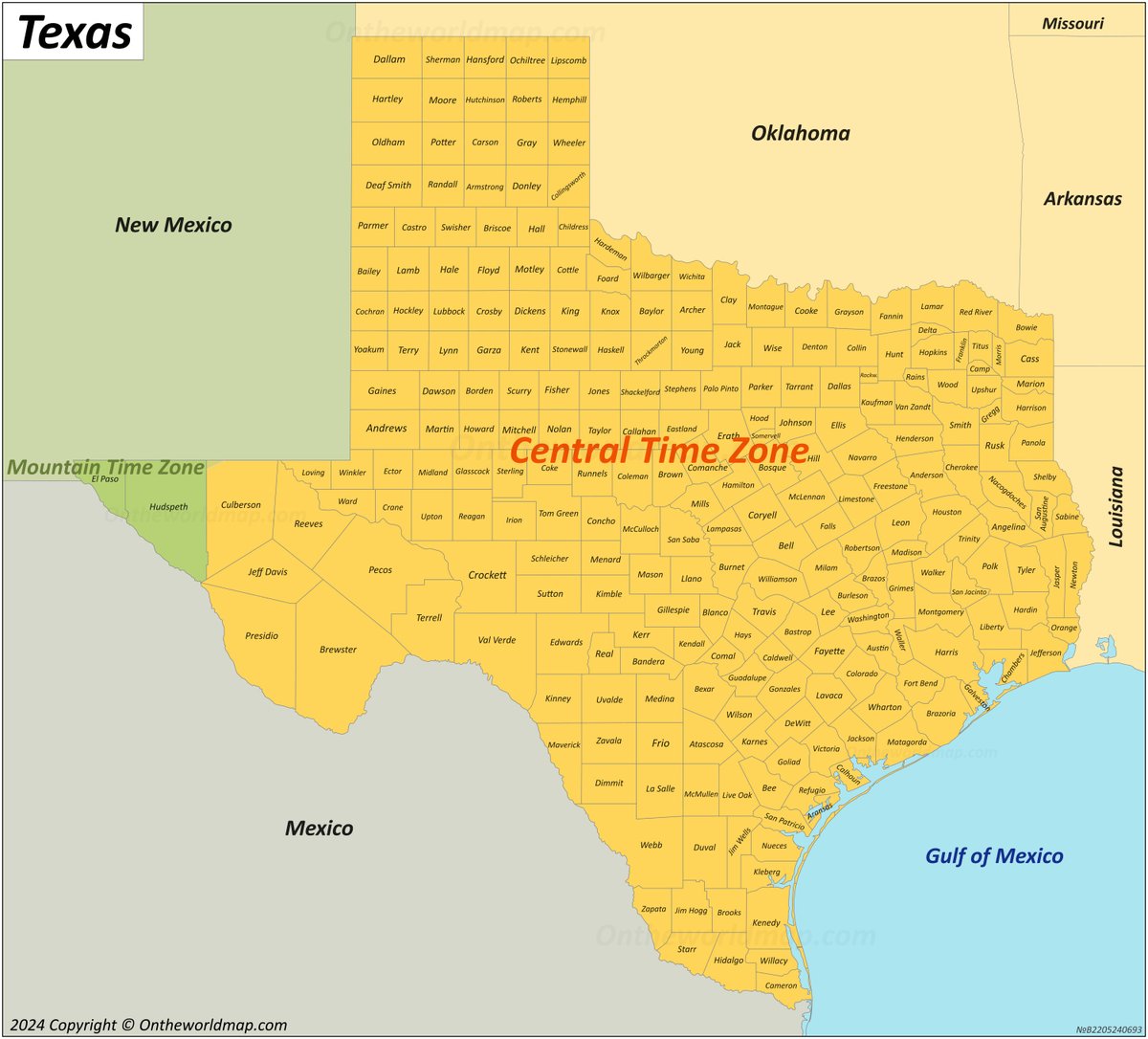
While most of Texas is in the Central Time zone, there is a small western sliver of the state that observes Mountain Time. This includes El Paso and Hudspeth County. However, Fort Worth is firmly in the Central Time zone and is not affected by the Mountain Time observance in far West Texas.
What's the best way to convert Fort Worth time to another time zone?
The most reliable way is to use a world clock or time zone converter tool online. These tools allow you to input Fort Worth's time (or your local time) and immediately see the equivalent time in any other city or time zone, accurately factoring in Daylight Saving Time wherever applicable. Many smartphone clock apps also have built-in world clock functions. Always use the UTC offset (e.g., UTC-6 for CST, UTC-5 for CDT) for the most unambiguous conversions.
Tools and Best Practices for Staying on Time in Fort Worth
Mastering time in Fort Worth isn't just about knowing the current hour; it's about building habits and leveraging tools that keep you consistently punctual and organized.
Leverage Technology for Seamless Transitions
Your digital devices are your best defense against time zone confusion and DST mishaps.
- Enable Automatic Time Zone Settings: On your smartphone, computer, and other smart devices, ensure the "Set Automatically" or "Automatic Time Zone" feature is turned on. This allows your device to update its time and time zone based on network information or GPS, making DST changes effortless.
- Use World Clocks: Add Fort Worth to your world clock application on your phone or computer. This provides an instant glance at the local time, regardless of where you are.
- Sync with NTP Servers: For highly accurate timekeeping on computers and network devices, ensure they are configured to synchronize with Network Time Protocol (NTP) servers. These servers provide atomic clock-level precision.
Plan Ahead for Time-Sensitive Engagements
Proactive planning is key, especially when dealing with DST changes or communicating across different time zones.
- Double-Check DST Dates: While most devices handle it, it's a good habit to mentally note the "spring forward" and "fall back" dates each year, particularly for any non-digital clocks or for planning early morning events on those specific Sundays.
- Specify Time Zones in Communications: When scheduling meetings, flights, or events that involve people outside Fort Worth, always include the time zone. Instead of just "9 AM," write "9 AM CT" or "9 AM Central Time (Fort Worth)." Better yet, offer the time in both Fort Worth's local time and the recipient's local time for ultimate clarity.
- Use Calendar Tools: Modern digital calendars (Google Calendar, Outlook, Apple Calendar) are excellent at handling time zones. When you create an event, you can specify its time zone, and the calendar will automatically adjust the displayed time for attendees in different zones.
Create a "Time Awareness" Routine
Develop simple habits that keep time top-of-mind.
- Morning Device Check: A quick glance at your phone or computer first thing in the morning confirms the correct time and date.
- Pre-Travel Checklist: Before any trip, confirm the destination's time zone and how it differs from your origin. Adjust your mindset even before you adjust your watch.
- Mental Time Adjustments: When speaking to someone in a different time zone, mentally calculate the difference. For example, if you know someone in New York (ET), and it's 10 AM in Fort Worth (CT), you know it's 11 AM in New York.
By integrating these practices and tools, you won't just know the Current Time in Fort Worth (Live & Real-time); you'll master it, ensuring smooth sailing through your daily schedule, travel plans, and global communications.
Your Fort Worth Time Command Center
You now possess the knowledge and tools to confidently navigate the current time in Fort Worth, Texas, understanding not just what the clock says, but why it says it. From the rhythmic shift of Daylight Saving Time to the global precision of UTC, Fort Worth's time is a dynamic yet predictable element of its vibrant identity.
Whether you're a long-time resident, a new arrival, or planning a future visit, being in sync with Fort Worth's Central Time (CST/CDT) ensures you’re always punctual, perfectly scheduled, and ready for whatever the city has in store. Embrace the digital convenience of automatic time updates, leverage online tools for planning, and communicate clearly when coordinating across different zones. With this comprehensive guide, you are now your own time-zone expert for Fort Worth.